Proportionality

The Great Pyramid in Egypt embodied the same ratio, a proportion observed throughout people, animals, and the natural world. We are therefore no longer surprised to discover why this pattern was chosen.
Pythagoras (c. 570–495 BCE) was a Greek philosopher and mathematician whose thought held that numbers, proportions, and geometric forms constituted the foundation of the cosmos. His school regarded numerical relationships as the key to the structure of nature — an idea that profoundly influenced later mathematics, music theory, and natural philosophy.

Time

The book of nature is written in mathematical language. Its characters are circles, triangles, and other geometrical figures, without which one cannot understand a single word of it. Without them, a person would wander in a dark labyrinth. — Galileo Galilei
Galileo’s father, Vincenzo Galilei, a lutenist and music theorist, carried out experiments that revealed perhaps the earliest known non‑linear physical relationship: in a stretched string, the pitch varies with the square root of the tension.
These observations lay within the Pythagorean tradition of music, well known to instrument makers, which held that subdividing a string by whole‑number ratios produces a harmonious scale. Thus, a modest body of mathematics had long linked music with physical science, and the young Galileo could see how his father’s findings extended that tradition. Galileo was among the first modern thinkers to state clearly that the laws of nature are mathematical. We will therefore calculate the proportionality of a stretched string.
In 1612, having determined the orbital periods of Jupiter’s satellites, Galileo proposed that sufficiently accurate knowledge of their orbits would allow their positions to serve as a universal clock, making it possible to determine longitude. He returned to this problem repeatedly throughout his life, but the practical difficulties were considerable. The method was first successfully applied by Giovanni Domenico Cassini in 1681.
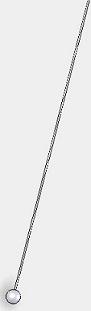
Pendulum
From its discovery around 1602 by Galileo Galilei, the regular motion of pendulums was used for timekeeping, and it remained the world’s most accurate timekeeping technology until the 1930s. Pendulums were employed to regulate pendulum clocks and were incorporated into scientific instruments such as accelerometers and seismometers. Historically, they were also used as gravimeters to measure the acceleration due to gravity in geophysical surveys, and even served as a standard of length.
Dimensionalities

Mathematics has identified the Pascal’s triangle row factor as 11, but in the real world this value appears as 1.1. Blaise Pascal was convinced that the pattern contained something significant, yet he was unable to resolve it.
1 1 1
1.1 x 1 = 1,1 1 1 1 +1 = 2
1.1 x 1.1 = 1.21 1 2 1 1 + 2 + 1 = 4
1.1 x 1.21 = 1.331 1 3 3 1 1 + 3 + 3 + 1 = 8
1.1 x 1.331 = 1.4641 1 4 6 4 1 1 + 4 + 6 + 4 + 1 = 16
Dimensionalities
0-d 1 One point
1-d 1. 1 Line
2-d 1. 2 1 Area
3-d 1. 3 3 1 Volume
4-d 1. 4 6 4 1 Aika - Time
Suhteellisuus - Proportionality
0-d
A single point is something you cannot see, because a second point does not exist — as we all understand.
1-d
Line consists of points -----. Distance or length of a feature. Change of the girder length causes a change in the deflection. A factor of 1.1 (2) plays an important role in understanding the deflection. Both images show the same meaning.

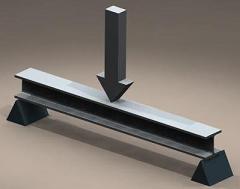
Tangible distortion Intangible (temporal) distortion
2-d
Flat shape, which is seen back and forth in different directions
Energy - Time dilation

The higher the velocity of one body, the less time it experiences relative to another body moving at a lower velocity.
E = m c2
c2 = the cover of light = area
2-d 1, 2 1 Pinta-ala - Area
1.21 x 1.0328 = 1.25
If we stand still, the speed of light over us is 300 000 km /sec.
If we travel at a velocity equal to 0.25 times the speed of light, the speed of light itself remains unchanged at approximately 300 000 km/s relative to us.
1 + 0.25 = 1.25
Energy = Mass x the coverage of the speed of light
Speed in itself contains the time unit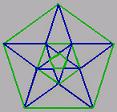
We come back to the pentagon.
2 x 3.14 rad = 6.28 rad
6,28 rad / 5 = 1,256 rad
1.0 - 1.12 - 1.25 - 1.6 - 2.0 - 2.5 ...
1.122 = 1.25(6)
Mathematic with figure symbols

The gravitational field of 9.82 m/s2 and the Universal Friction 1.033

10.5.2026*8:51 (635 - 43951)
www.karikolehmainen.com
epcalculation@gmail.com |
