Plato's Allegory of the Cave
Platonin luolaesimerkki
Among the prisoners, some have seen only the shifting silhouettes on the wall. For example, they might perceive the shadow of a barrel as a rectangle. Once emptied, the barrel is carried back by another man, held horizontally by both ends. With the light now aligned along its length as he walks past, the shadow appears as a perfect circle. In a third instance, the barrel is carried at an angle, producing an oval-shaped shadow. From these impressions, the prisoners conclude that three different objects have passed by—though in truth, it is the same barrel each time. In the allegory, one prisoner is eventually freed. At first, he resists leaving the cave, the brightness of daylight overwhelming his eyes. But as he grows accustomed to the light, he begins to see the real objects and the world beyond the cavern. When he is compelled to return to the darkness, the others refuse to believe his account of the true world outside. Should he attempt to free them, they would likely kill him. This, in broad strokes, is the essence of the allegory—though Plato’s original contains many more layers of meaning. The idea of the shadows formating reality has the similar idea with EP Calculation. Visual Geometry is one part of the calculation. Calculation opens into the energy section, because shadows belong to energy of the light. The light covers the surface on which the shadows appear. EP Calculation defines case after case, the unidentified values "by way of the shadows". (887) Plato had the idea of the light behind the all. Later Albert Einsteind did the same observation as the speed of light. The EP Calculation phenomena are like barrels. They look different, but they are ultimately synonymous with each other. |


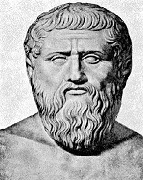 Plato used the allegory of the cave to illustrate the human condition, comparing it to that of people living deep within a cavern. In this vision, reality for the prisoners is nothing more than shadows cast upon the cave wall by objects passing in front of a light source—whether sunlight filtering in or the glow of a fire. Like these cave dwellers, modern humans touch only the surface of reality, limited by the reach of their senses and abilities.